
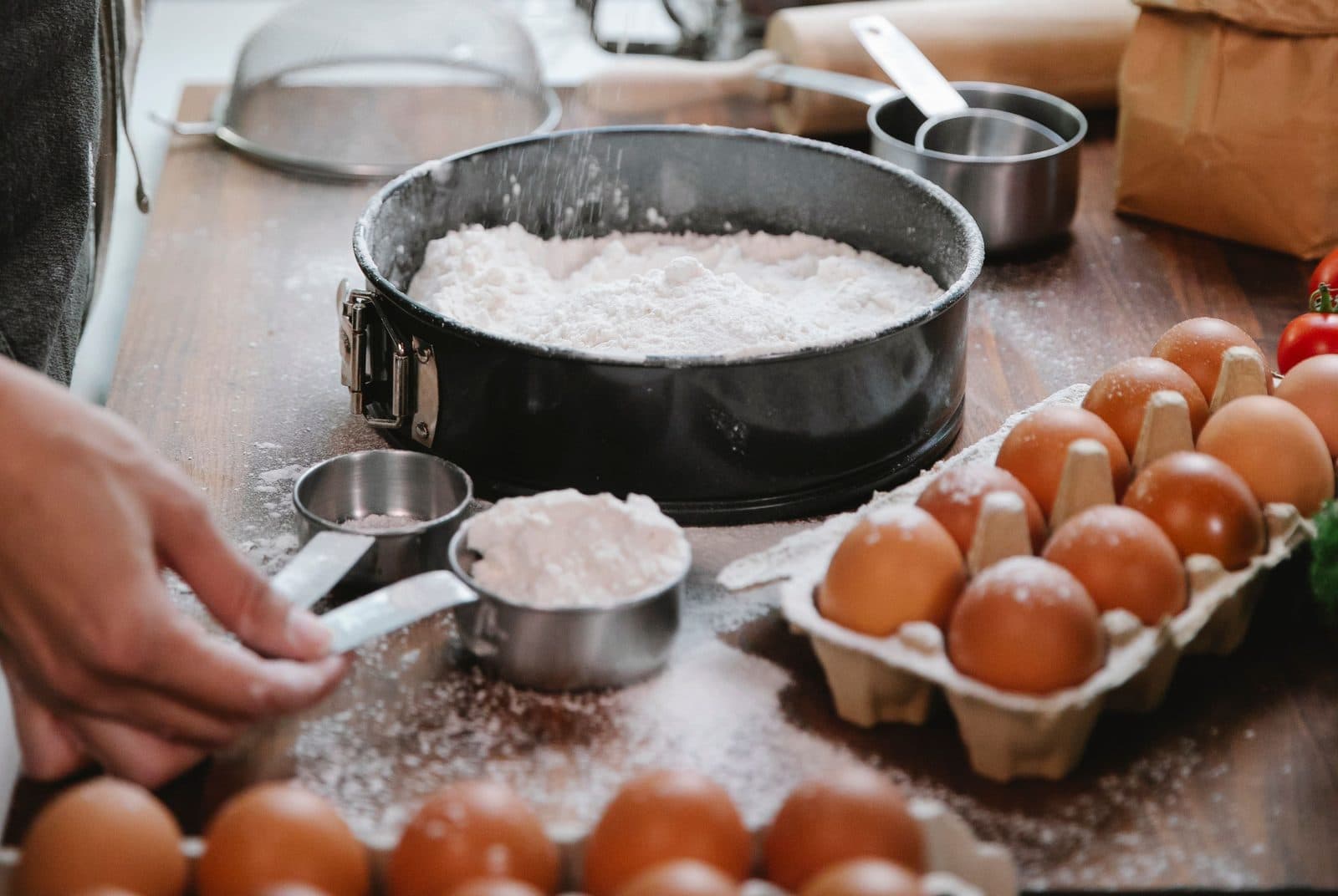


"Why is your quote higher than the other factory?" is a fair question, and it usually has a specific answer. Two collagen drinks that look identical on a shelf can differ by a factor of three in cost, and none of that difference is visible in the photograph.
This article explains the levers. It does not quote prices — every powder is costed against its own formula, so a general price list would be misleading rather than helpful.
What are the biggest cost drivers in a powder product?
Six, roughly in order of impact: the dosage and grade of the active ingredient, the pack format, the run size, the flavour and sweetener system, the packaging material, and the certification and testing scope required.
| Driver | Why it moves the number |
|---|---|
| Active dosage and grade | The difference between a token inclusion and a clinically-used dose is often the whole cost of the product |
| Pack format | Packaging material and filling operations per unit sold |
| Run size | Setup, cleaning and changeover are fixed costs spread over the batch |
| Flavour and sweetener system | Masking a bitter active costs more than flavouring a neutral base |
| Packaging material | Foil laminate, printed film, rigid containers, closures, cartons |
| Certification and testing | Halal-certified ingredient chains, additional lab testing, export documentation |
Why does active dosage matter so much?
Because the active is usually the most expensive gram in the formula. A product containing 500 mg of an extract and one containing 5,000 mg of the same extract are not variations of each other — they are different products with different costs, even though both can legally list the same ingredient.
This is where the cheapest quote often comes from. A competitor product at half the price is frequently not the same product: the ingredient is present, but at a level chosen to appear on the label rather than to do anything.
When comparing quotations, compare the specification, not the ingredient list. Ask for the dosage per serving of each active, and compare like for like.
Grade matters as much as dosage. Two ingredients with the same name can differ in extraction ratio, standardised active percentage, particle size, solubility and origin — and therefore in price.
How does run size change the per-unit cost?
Setup, line cleaning, changeover and QC are largely fixed per batch. Spread over a small run they dominate the unit cost; spread over a large one they nearly disappear. This is why the same formula can be uneconomic at one volume and obvious at another.
Consequences worth planning around:
- The step from a trial quantity to a commercial quantity often improves unit cost more than any formulation change would.
- Splitting an order into several small runs costs more than one larger run of the same total volume.
- Multiple flavours means multiple changeovers, and each one carries a cleaning cost. Launching with two flavours instead of five is usually the better commercial decision at the start.
Minimum order quantities follow from the same arithmetic, which is why they are quoted against a format and a run size rather than published as one number.
Why does flavour cost more on some products?
Because some actives taste bad. Masking bitterness, astringency or a strong botanical note takes a more complex flavour system, more of it, and more development time than flavouring a neutral base does.
Products that routinely cost more to flavour: high-dose herbal extracts, plant proteins, some vitamin and mineral premixes, and anything with a strong natural colour that must not be masked. If you also want no artificial sweetener and no artificial flavour, that constraint has a price attached.
What does certification add to the cost?
Halal certification does not add a fee to your unit cost, but it constrains the ingredient list. Every raw material must come with its own valid Halal certification, and the certified version of an ingredient is not always the cheapest one on the market.
The same applies to any additional testing you need for your market — heavy metals, microbiology, nutrient verification, allergen testing. Each is a real cost and each is worth knowing about before the quotation rather than after.
What can you do to reduce cost without cheapening the product?
- Fix the target retail price first. Working backwards from it is how a formulator decides what is affordable. Working forwards from a wish list usually produces a product that cannot be sold.
- Choose the format deliberately. A jar version of the same formula often costs far less per gram than a sachet version.
- Consolidate flavours. Two well-chosen flavours beat five that each carry a changeover.
- Commit to a realistic run size. The single largest lever most brand owners have, and the one they most often underuse.
- Send a reference product. Matching an existing product is faster and cheaper than developing from a written description.
What a useful quotation request looks like
Include these and a quotation can usually be prepared without another round of questions:
- Product type and the effect or taste you want
- Target retail price per unit
- Pack format and rough fill weight
- Estimated monthly or annual volume
- Market you are selling into
- Any must-have or must-avoid ingredients
- A reference product, if you have one
Cost is quoted per format against your brief. The formats are set out across the product range; send the brief through Contact Us.
Frequently asked questions
Why won't you publish a price list? Because every powder is costed against its own formula. A published number would be either meaninglessly wide or wrong for your product.
What is the minimum order quantity? It depends on the format and run size and is quoted with your brief.
Is a cheaper quote always a worse product? Not always, but it is always a different specification. Compare dosage and grade before comparing price.
Does a larger order always reduce unit cost? Up to a point, and the improvement is largest at the small end. Beyond a certain scale, ingredient cost dominates and further volume changes little.
Do development and samples cost extra? The first bench sample is free. Beyond that, development cost depends on the complexity of the formula and is set out in the costing.