
Tea · International
OEM Matcha Powder Manufacturer in Malaysia
OEM & private label matcha powder - matcha latte, sugar-free and blended formats, Halal manufactured in sachet, stick pack or bulk for your brand.
What makes matcha different from ordinary green tea?
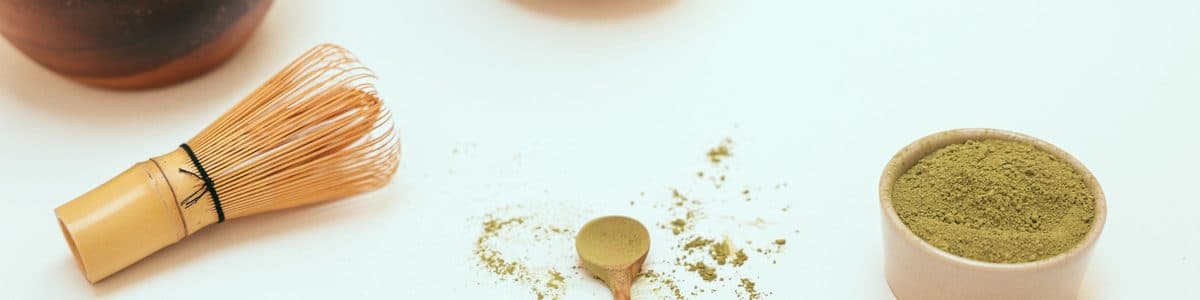
Matcha is green tea grown in shade and ground to a fine powder, then suspended in water rather than steeped and strained. The shading is what gives it the bright green colour and the strong umami character, and it is why matcha tastes savoury where other green teas taste grassy.
Matcha is consumed suspended in hot water, which is the whole difference. With steeped tea you drink an extract and throw the leaf away; with matcha you drink the leaf. That is also why matcha carries more of everything - colour, umami, caffeine and bitterness - than a brewed green tea of the same weight.
Shade growing before harvest is the step that defines it. Restricting light changes how the leaf develops and produces the vivid green and the savoury depth that buyers recognise instantly. It is also why grade matters so much: a dull, yellowish matcha has usually been handled badly or made from the wrong leaf, and no amount of sweetening hides it.
In Malaysia matcha arrived as a café drink and stayed as a retail category, which means the buyer's reference point is a latte in a cup rather than a tea ceremony. That reference point is what an instant product has to match.
What does matcha taste like?
Savoury and vegetal with a firm bitterness and a lingering umami depth that other green teas do not have. In a latte the milk and sugar soften it into something creamy and grassy, but the bitter edge is part of the signature rather than a fault.
| Character | Level | Why |
|---|---|---|
| Sweetness | Medium | Matcha itself is not sweet; latte formats add sugar, which is where most retail products sit. |
| Bitterness | High | You consume the whole leaf, so catechins come with it - bitterness is inherent. |
| Roast | Low | Matcha is steamed and shade-grown, not roasted; a roasted green tea is hojicha instead. |
| Creaminess | Medium | Depends on format - a matcha latte is creamy, a plain matcha is not. |
| Aroma | High | Strong vegetal, marine and umami aroma, which is exactly what buyers are paying for. |
Indicative flavour positioning to help write a product brief. It is not sensory panel data, and the finished taste is set with you at sampling stage.
What has to be decided to make matcha as an instant powder?
Colour protection first, because colour is how this product is judged. Matcha is already a powder, so the work is not instantising it - it is grade selection, blending, and keeping the green from turning yellow-brown on the shelf.
- Colour is the product. A dull or yellowish matcha reads as cheap or stale before anyone tastes it. Light, heat and oxygen all push the colour that way, which makes the packaging barrier a formulation-level decision rather than a cosmetic one.
- Grade is the main cost lever and the main quality lever at once. Matcha spans a wide quality range, and the difference shows in colour, bitterness and aroma simultaneously. Deciding the grade is deciding the product's position.
- It is a suspension, not a solution. Matcha does not dissolve - it disperses. Fine particles clump when they hit water, which is why a matcha latte powder is engineered around wetting behaviour rather than solubility.
- Decide whether sugar and creamer are in the pack. A plain matcha and a matcha latte are different products with different shelf lives and different buyers, and the blend ratio changes how visible the colour problem becomes.
What are the Halal risk points in a matcha powder?
Not the tea. Matcha is simply ground leaf. The risk sits in whatever is blended with it - creamer, milk powder, emulsifiers and any colour stabiliser used to protect the green.
A plain matcha is one of the cleanest products in this library from a certification point of view. A matcha latte is not, because it inherits every question a creamer blend carries: sodium caseinate is milk derived, and mono- and diglycerides (E471) can be plant or animal sourced under a single ingredient name.
D&O manufactures under JAKIM Halal certification to MS 1500, and every raw material on a Halal-certified line carries its own valid certificate. The recurring failure points are listed in Top 10 Ingredients That Fail Halal Certification.
Which pack formats suit matcha powder?
Sachet, stick pack, jar or bulk. The format is chosen with the formula rather than after it, because it decides how the powder is protected from moisture and how the buyer meets the product.
| Format | What it suits |
|---|---|
| Sachet | The best colour protection available, because the powder meets light and air only once. |
| Stick pack | Café-style retail and e-commerce bundles, with the same single-exposure advantage. |
| Jar | Attractive for premium presentation but the hardest format for matcha - repeated opening is exactly what dulls the colour. |
| Bulk | Café and bakery supply, where turnover is fast enough that shelf colour loss is not the limiting factor. |
Where is this manufactured, and under what certification?
At D&O Nutraceutical Manufacturing Sdn. Bhd. in Lahat, Perak, Malaysia — six factory units certified Halal by JAKIM (MS 1500), GMP to MS 1514:2022 (SIRIM QAS, cert. GMP 00203), HACCP to MS 1480:2019 (SIRIM QAS, cert. HACCP 00425), ISO 22000 (SIRIM QAS, cert. FSMS 00229) and MeSTI (Ministry of Health, cert. ME0523069-0/1).
The plant is outside Ipoh, between Kuala Lumpur and Penang, with road access to both Port Klang and Penang Port for export. Four units are used for production and two for packing and assembly, 4,000 sq ft each.
D&O is the powder functional food manufacturer of ORIZI Group. Liquid and ready-to-drink formats are made by Nutrizens Wellness Sdn. Bhd.; cosmetics, skincare and personal care by Dr Orizi; medical devices by Skyler and Imedify.
Certificates and their certified scope are supplied on request. JAKIM Halal certification is verifiable in the MYeHALAL directory, MeSTI in the Ministry of Health FoSIM system, and the GMP, HACCP and ISO 22000 certificates with SIRIM QAS International. The MS standards themselves are published by Standards Malaysia, and ISO 22000 by ISO.
Where this flavour is produced
Matcha sits in the Tea Powder line. The full list of instant beverage & dessertflavours D&O has produced is in the flavour library.
Frequently asked questions
- Why is matcha more expensive than green tea powder?
- Because of how it is grown and processed. Matcha comes from shade-grown leaf, which restricts yield, and the whole leaf is consumed rather than steeped and discarded. A green tea powder made from ordinary leaf costs less and looks and tastes noticeably different.
- Why does matcha turn yellow-brown?
- Light, heat and oxygen degrade the green. It is a shelf and packaging problem as much as a formulation one, which is why the barrier and the format are chosen with the product rather than after it. A sealed sachet protects colour far better than a jar opened daily.
- Why does matcha clump when mixed?
- Because it disperses rather than dissolves. The particles are extremely fine and clump on contact with water unless the powder is built for wetting. That is the engineering problem in a matcha latte sachet, and it is the reason a traditional preparation uses a whisk.
- Is matcha naturally bitter?
- Yes, and it is meant to be. Because the whole leaf is consumed, catechins come with it. In a latte the milk and sugar temper that into something creamy, but a matcha with no bitterness at all usually means very little actual matcha.
- Which pack format should I choose?
- Sachets and stick packs suit single servings, trial sizes and e-commerce, because the dose is fixed and the barrier protects the powder. Jars suit repeat home use. Bulk suits a brand doing its own filling. Hygroscopic flavours, which draw moisture from the air, are better in a sealed sachet than in a jar that is opened daily.
- How is shelf life decided?
- By stability testing on your actual formula in your actual pack, not by a number quoted upfront. The powder, the barrier film and the destination climate all move it. Moisture is what usually ends a powder's life, which is why pack format is specified alongside the formula rather than after it.
- Can D&O develop a flavour that is not in the library?
- Yes. The library is what has been produced before, not a menu limit. Bring a reference product, a target taste or a competitor sample and the R&D lab benchmarks against it. Flavour development is part of the OEM brief rather than a separate service.
- What is the difference between OEM, ODM, private label and white label?
- OEM manufactures to your specification. ODM means the manufacturer develops the formula and you brand it. Private label puts your brand on an existing formula. White label is the same base product sold to several brands. D&O works OEM and ODM, so the formula can start from your brief or from our library.
Get a Free Sample of Your Own Product
Tell us what you want to make — the taste or effect, your target retail price, the pack format and rough monthly volume. We come back with a costing and a free bench sample made to your brief, not a stock product. Halal OEM manufacturing in Perak, Malaysia, in sachet, stick pack, jar or bulk.
JAKIM Halal · GMP MS 1514 · HACCP MS 1480 · ISO 22000 · MeSTI certified