
Protein & Meal · Malaysian
OEM Taro Powder Manufacturer in Malaysia
Also known as Keladi
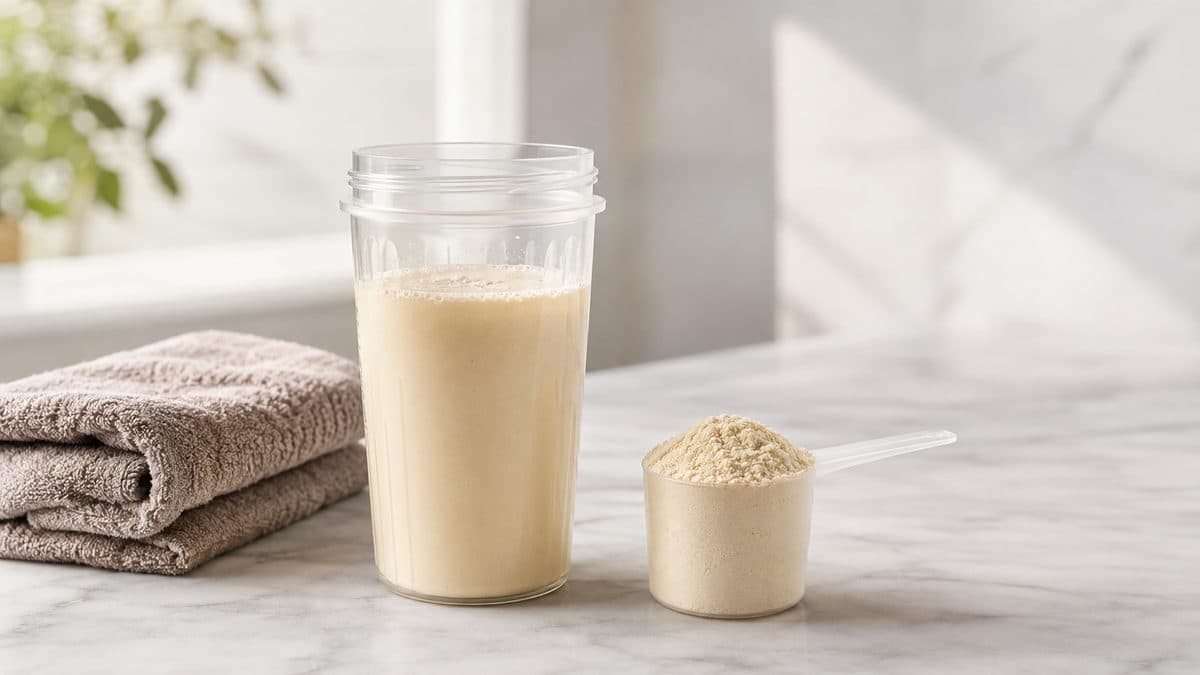
OEM & private label taro powder - keladi flavour for protein, meal replacement and milk tea, Halal manufactured in sachet, jar or bulk for your brand.
What is taro?
A root vegetable, known in Malay as keladi, grown for its starchy corms. It is the most widely cultivated plant of several in the Araceae family used as vegetables, and it is a food staple across African, Caribbean, Oceanian, East Asian, Southeast Asian and South Asian cultures.
Taro is one of the oldest cultivated foods in the world, and almost everywhere it grows it is treated as a starch staple rather than a dessert ingredient. The sweet, milky taro that most people now meet in bubble tea and ice cream is a comparatively recent reading of it.
That gap matters for product development, because the flavour buyers expect is not really the taste of the root. Cooked taro is mild, earthy and faintly nutty. What people identify as taro flavour is that mildness plus milk, sugar and - almost always - a lilac colour the vegetable does not actually provide.
Raw taro is also an irritant and must be cooked, which is a processing requirement rather than a formulation preference, and one worth stating plainly.
What does taro taste like?
Mild, starchy and gently nutty, with a soft sweetness and a body that comes from starch rather than fat. On its own it is subtle to the point of plain, which is why it is almost always built with milk and sugar around it.
| Character | Level | Why |
|---|---|---|
| Sweetness | Medium | Faintly sweet by nature; products add more because the root alone reads as plain. |
| Bitterness | Low | No bitterness in properly cooked taro. |
| Roast | Low | No roasting; any nuttiness comes from the root itself rather than heat development. |
| Creaminess | High | Starch gives a thick, smooth body, and taro is almost always paired with milk. |
| Aroma | Low | Subtle and earthy - among the least aromatic flavours in this library. |
Indicative flavour positioning to help write a product brief. It is not sensory panel data, and the finished taste is set with you at sampling stage.
What has to be decided to make taro as a powder?
The colour, because it is the part most likely to mislead. Real taro is beige to off-white with faint purple flecks. The lilac that buyers associate with the flavour comes from added colour or from purple sweet potato, not from the root.
- The purple is a decision, not a given. A taro product coloured to meet expectation is a legitimate formulation choice and a common one, but it is a labelling question with market-permission consequences, and it should never be implied to come from the root.
- Taro is starch, which is both the body and the problem. Starch gives the mouthfeel that makes taro work in a meal replacement, but it also thickens on standing and can go gluey if the inclusion is pushed. The target viscosity is specified rather than discovered.
- It is a quiet flavour, so it rides on its partner. With milk and sugar it is recognisable; alone it is close to plain. A taro protein powder is really a taro-and-milk system, and the brief should say which.
- Raw taro is an irritant and has to be cooked. This is a processing requirement rather than a preference, and it rules out using the raw root as a simple dry ingredient.
What are the Halal risk points in a taro powder?
The colour and the dairy or protein system. Taro is a plant starch and straightforward. Purple colour preparations are the specific risk, because some use carriers that need their own certificate, and protein bases bring their own questions.
Where the product is a protein powder, the protein source is the first check: whey is a cheese by-product and carries the status of the rennet used upstream, so a Halal certificate covering the whey itself is required rather than one for the finished blend. Microbial rennet alternatives are widely available. Colour preparations may use gelatine or animal-derived carriers even where the pigment is plant based.
D&O manufactures under JAKIM Halal certification to MS 1500, and every raw material on a Halal-certified line carries its own valid certificate. The recurring failure points are listed in Top 10 Ingredients That Fail Halal Certification.
Which pack formats suit taro powder?
Sachet, stick pack, jar or bulk. The format is chosen with the formula rather than after it, because it decides how the powder is protected from moisture and how the buyer meets the product.
| Format | What it suits |
|---|---|
| Sachet | Single-serve protein or meal replacement, where the dose is the point. |
| Stick pack | Convenience and sampling, and the format most used for milk-tea style taro drinks. |
| Jar | Standard for protein and meal replacement bought in volume and scooped. |
| Bulk | Beverage shops and brands filling their own packs. |
Where is this manufactured, and under what certification?
At D&O Nutraceutical Manufacturing Sdn. Bhd. in Lahat, Perak, Malaysia — six factory units certified Halal by JAKIM (MS 1500), GMP to MS 1514:2022 (SIRIM QAS, cert. GMP 00203), HACCP to MS 1480:2019 (SIRIM QAS, cert. HACCP 00425), ISO 22000 (SIRIM QAS, cert. FSMS 00229) and MeSTI (Ministry of Health, cert. ME0523069-0/1).
The plant is outside Ipoh, between Kuala Lumpur and Penang, with road access to both Port Klang and Penang Port for export. Four units are used for production and two for packing and assembly, 4,000 sq ft each.
D&O is the powder functional food manufacturer of ORIZI Group. Liquid and ready-to-drink formats are made by Nutrizens Wellness Sdn. Bhd.; cosmetics, skincare and personal care by Dr Orizi; medical devices by Skyler and Imedify.
Certificates and their certified scope are supplied on request. JAKIM Halal certification is verifiable in the MYeHALAL directory, MeSTI in the Ministry of Health FoSIM system, and the GMP, HACCP and ISO 22000 certificates with SIRIM QAS International. The MS standards themselves are published by Standards Malaysia, and ISO 22000 by ISO.
Where this flavour is produced
Taro sits in the Protein Powder line. The full list of nutrition & meal replacementflavours D&O has produced is in the flavour library.
Frequently asked questions
- Is taro naturally purple?
- Not really. The corm is beige to off-white with faint purple flecks. The lilac colour buyers associate with taro flavour comes from added colour or from purple sweet potato, so it is a formulation decision rather than something the root supplies.
- Why does taro powder thicken on standing?
- Because it is largely starch, and starch continues to hydrate after mixing. That body is exactly why taro works in meal replacements, but pushed too far it goes gluey, so the target viscosity is specified rather than left to the inclusion rate.
- Can raw taro be used directly in a powder?
- No. Raw taro is an irritant and must be cooked, which is a processing requirement rather than a preference. It means the root cannot simply be dried and milled as a raw ingredient.
- Why does taro taste so mild on its own?
- Because it is a starch staple rather than a dessert ingredient. Its culinary history is savoury almost everywhere it grows. The sweet, milky taro people recognise today is that mild base plus milk and sugar, which is why the pairing is part of the brief.
- Will my product be classified as a food or as a health supplement?
- The claim decides it, not the format. A powder sold as a drink is a food under the Food Act 1983. The moment it carries a health claim or a therapeutic dose it falls to the National Pharmaceutical Regulatory Agency, which requires product registration before sale. Settle this before artwork, because it changes the label.
- Does a Halal-certified factory make every ingredient Halal?
- No, and this is the most common misunderstanding. Certification covers the plant and the materials running in it, so every raw material entering a Halal line needs its own valid certificate from its supplier. An assurance in an email is not a certificate. Substituting an ingredient late means re-sampling the formula.
- How does the sampling stage work?
- A brief goes to the R&D lab, which produces a bench sample for you to taste and adjust. Revisions are normal and expected, because taste targets are easier to describe by comparison than in words. Only once the sample is signed off does the formula, the pack format and the documentation get fixed.
- Can two flavours be combined in one product?
- Yes, and most launches do. Pairings such as mango with passionfruit, or black sesame with oat, are common in powder formats. The blend is worked out at sampling stage against your target retail price, because the ratio moves the cost as well as the taste.
Get a Free Sample of Your Own Product
Tell us what you want to make — the taste or effect, your target retail price, the pack format and rough monthly volume. We come back with a costing and a free bench sample made to your brief, not a stock product. Halal OEM manufacturing in Perak, Malaysia, in sachet, stick pack, jar or bulk.
JAKIM Halal · GMP MS 1514 · HACCP MS 1480 · ISO 22000 · MeSTI certified