
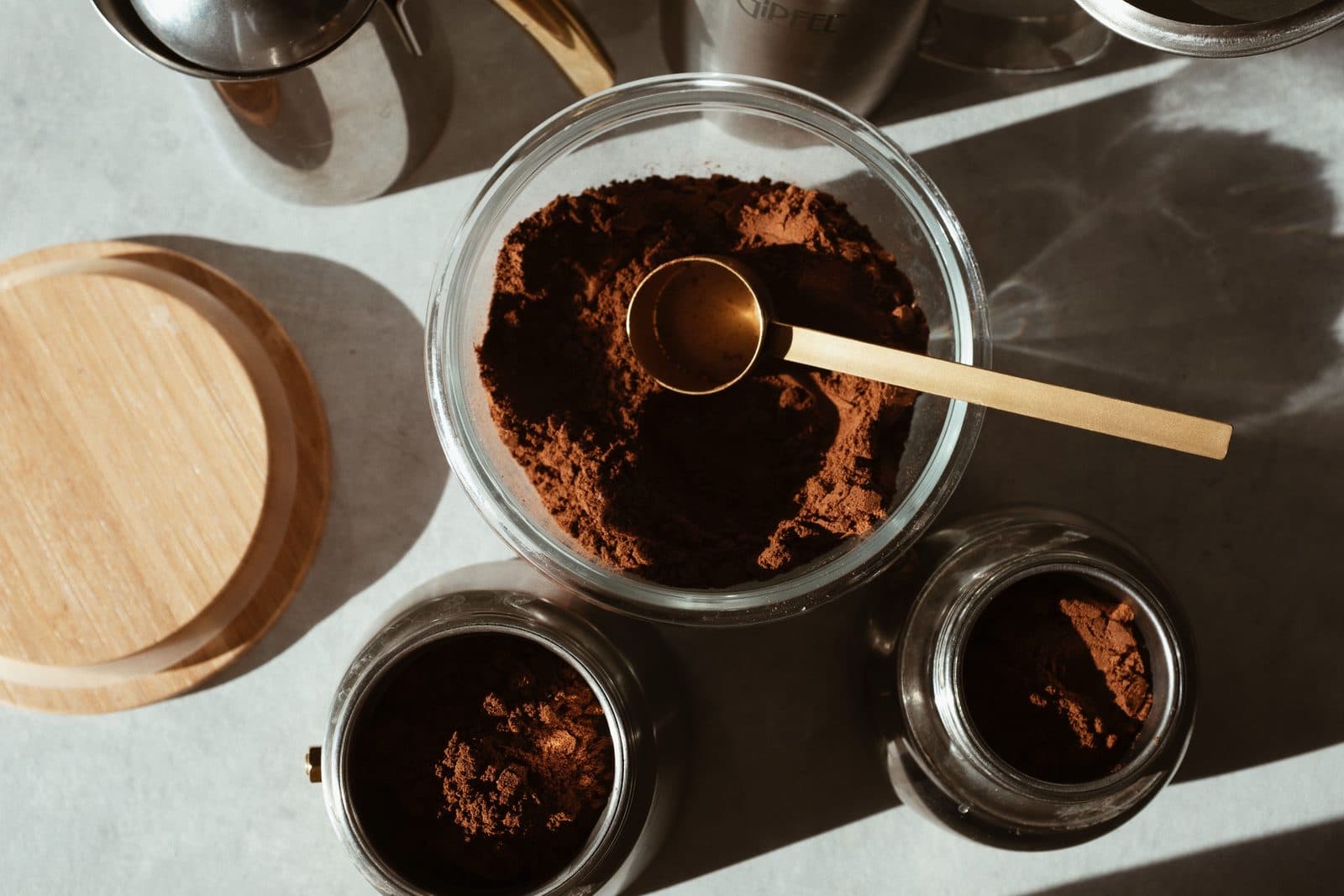


Chocolate malt is one of the most requested categories we quote, and one of the easiest to get subtly wrong. The formula looks simple — cocoa, malt, sugar, milk solids — and the differences between a product people buy twice and one they finish once sit almost entirely in the details.
What goes into a chocolate malt drink powder?
Five components: a cocoa source, a malt source, a sweetener system, a dairy or creamer base, and functional additives such as emulsifiers and anti-caking agents. Vitamins and minerals are added where the product is positioned as nutritional rather than as a treat.
| Component | Options | What it changes |
|---|---|---|
| Cocoa | Natural cocoa powder, alkalised (Dutch-process) cocoa | Colour, bitterness, acidity, how well it disperses |
| Malt | Malt extract powder, malted barley extract | Depth, that characteristic biscuit note, and colour |
| Sweetener | Sugar, sucrose blends, stevia, sucralose, maltodextrin | Cost, mouthfeel, calorie claim, aftertaste |
| Dairy / creamer | Full cream milk powder, skimmed milk powder, non-dairy creamer | Creaminess, cost, allergen and Halal considerations |
| Functional | Emulsifier, anti-caking agent, vitamins, minerals | Solubility, stability, nutritional positioning |
Alkalised or natural cocoa — which should you use?
Alkalised (Dutch-process) cocoa is darker, milder and less acidic; natural cocoa is lighter, sharper and more acidic. For a milky chocolate malt drink, alkalised cocoa is the usual choice because it disperses more evenly and gives the deep brown colour consumers expect.
Cocoa fat content is the second decision and it is a cost decision. Higher-fat cocoa gives a richer mouthfeel and better flavour carry; lower-fat cocoa is cheaper but thinner, and often needs compensating elsewhere in the formula.
There is no single right answer. What matters is choosing deliberately and then holding the specification, because switching cocoa mid-life changes both colour and taste in ways customers notice immediately.
What does malt actually contribute?
Malt extract provides the biscuit-like depth that separates a chocolate malt drink from plain chocolate milk powder. It also contributes natural sweetness and colour, which means changing the malt level changes the sugar balance too.
Two practical points:
- Malt extract is hygroscopic. It attracts moisture, which directly affects caking and therefore your packaging decision.
- Malted barley contains gluten. If a gluten-free claim is required, the malt source has to change, and the flavour profile changes with it. Decide this before development, not after.
Where does Halal certification usually cause a problem here?
Not in the cocoa or the malt. The recurring pressure points are the emulsifier, the flavour carrier and anything dairy-derived — precisely the ingredients nobody thinks to check.
| Ingredient | The issue | What to ask the supplier |
|---|---|---|
| Emulsifier (mono- and diglycerides) | Can be derived from animal fat or from plants | Source declaration plus a valid Halal certificate |
| Flavour | Liquid flavours are often carried in ethanol | A Halal-certified version of the same flavour |
| Whey and milk derivatives | Upstream cheese production may have used animal rennet | Halal certification covering the whey, not the finished blend |
| Non-dairy creamer | Contains its own emulsifier and fat system | The creamer's own Halal certificate |
| Gelatine (in some fortified variants) | Bovine gelatine needs Halal slaughter certification; porcine is excluded | Avoid, or substitute fish or plant sources |
Every raw material in a Halal-certified line needs its own valid certificate, not an assurance in an email. That documentation requirement is why substituting an ingredient late in a project takes longer than people expect.
Milk powder or non-dairy creamer?
Milk powder gives a cleaner dairy taste and a stronger nutritional profile; non-dairy creamer is cheaper, more stable and avoids the dairy allergen. Most commercial chocolate malt products in this market use a creamer base, or a blend.
The decision affects four things at once: cost, mouthfeel, allergen labelling and shelf life — creamers carry fat that can oxidise, so a creamer-heavy formula puts more weight on the packaging barrier.
Which pack format suits a chocolate malt product?
Sachets in a 10 to 15 count box for retail and social commerce; a jar or tin for household repeat purchase; bulk for food service and for brands doing their own packing.
Malaysian retail behaviour points strongly at the sachet box for a launch: it lowers the trial price and suits how the product is actually sold online. A jar version usually follows once repeat purchase is established, because it gives a better cost per gram to the loyal customer.
Because malt extract is hygroscopic, the barrier film specification matters more here than it does for a neutral powder. This is a category where a cheaper film shows up as caked product four months later.
How is chocolate malt powder manufactured?
The sequence is the standard dry-blend process, with two category-specific points:
- Raw material intake and QC — cocoa and malt are checked for moisture on arrival, because both bring moisture into the blend.
- Weighing and dry blending — blend time is set per formula; over-blending a cocoa mix can segregate the fine cocoa from coarser particles rather than improve homogeneity.
- Agglomeration where required — this is what makes a powder dissolve in warm milk without lumping. It is the single biggest driver of perceived quality in this category.
- Filling — into sachet, stick pack, jar, tin or bulk.
- Finished goods QC — moisture, appearance, solubility and taste before release.
Where D&O fits
D&O manufactures chocolate and malt powder as an OEM product at its plant in Lahat, Perak, certified Halal by JAKIM (MS 1500), GMP to MS 1514:2022 (SIRIM QAS, cert. GMP 00203), HACCP to MS 1480:2019 (cert. HACCP 00425) and ISO 22000 (cert. FSMS 00229). See the chocolate and malt powder page for the product range, or send a reference product you want matched.
Frequently asked questions
Can you match an existing chocolate malt drink? Usually yes, to a close approximation. Send a physical sample — matching from a photograph or an ingredient list is far less accurate.
Can it be made with less sugar or with stevia? Yes, but expect the flavour system to change. Sugar carries flavour and provides body in this category, so removing it is a reformulation rather than a substitution.
Can it be made halal and gluten free? Halal, yes as standard. Gluten free requires changing the malt source, since malted barley contains gluten — and the taste changes with it.
Does it dissolve in cold water? Only if formulated and agglomerated for it. State the intended use case — hot milk, warm water, cold water or shaker — at the brief stage.
What shelf life is achievable? It depends on the formula and the pack, and is confirmed by stability testing on the actual product in the actual packaging.