
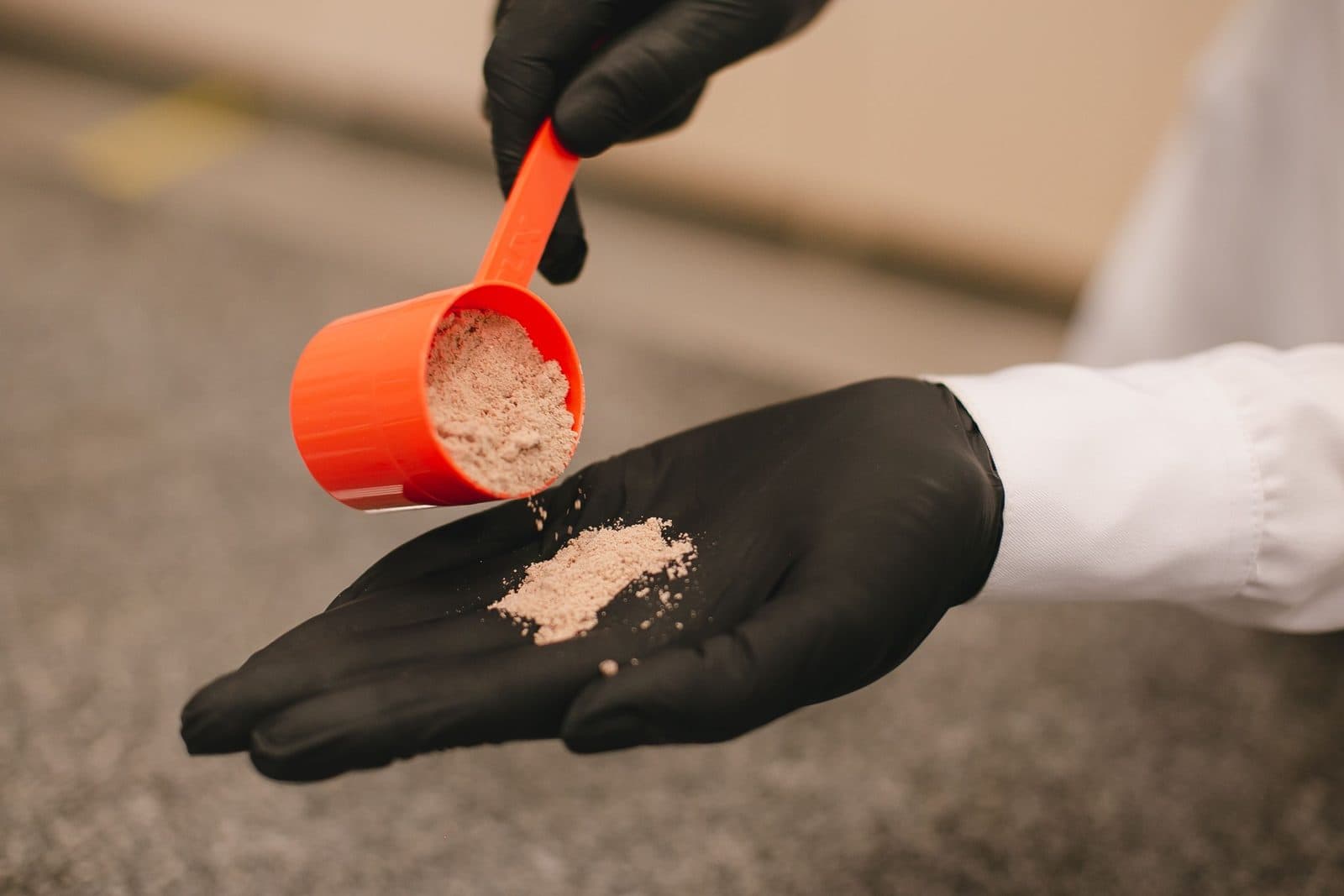


Coffee is the easiest daily habit in Malaysia to build a brand on, and the category where a small manufacturing detail decides whether people buy a second box. The coffee itself is rarely the differentiator — the creamer, the agglomeration and the sweetness balance are.
What can an OEM coffee powder manufacturer make?
Instant coffee mixes rather than roasted beans: 3-in-1 and 2-in-1 mixes, white coffee, black instant coffee, and functional coffee with collagen, fibre or botanical extracts added.
| Product | What it is | Sells on |
|---|---|---|
| 3-in-1 | Coffee, creamer, sugar | Convenience and price |
| 2-in-1 | Coffee and creamer, no sugar | Sugar-conscious buyers |
| White coffee | Lower-roast beans, richer creamer system | Ipoh association, premium over 3-in-1 |
| Black instant | Coffee alone | Purity positioning, low cost per serve |
| Beauty / functional coffee | Coffee plus collagen, fibre or extracts | Two benefits in one habit |
What is the difference between white coffee and 3-in-1?
White coffee is defined by how the beans are roasted — a lighter roast with less charring — and by a richer, smoother creamer system. It is not simply a 3-in-1 with more milk powder, and the difference is immediately obvious to a Malaysian buyer.
Getting it right is a roast and creamer decision, not a flavouring one. Adding "white coffee flavour" to a standard 3-in-1 base produces something buyers here identify as fake within one cup.
Why does agglomeration matter so much in coffee?
Because clumping is the first thing a customer notices, and it reads as a counterfeit product regardless of the quality inside. Agglomeration binds fine particles into larger granules that wet and dissolve instead of floating and lumping.
It is the single biggest driver of perceived quality in instant coffee, and it is a process decision rather than a formula one. A well-agglomerated mid-price coffee outsells a poorly agglomerated expensive one.
What does the creamer decide?
Mouthfeel, cost, allergen labelling and shelf life — all at once. Non-dairy creamer is the standard base in this market. Milk powder gives a cleaner dairy taste and a stronger nutritional profile at higher cost and with a dairy allergen.
Creamers carry fat, and fat oxidises. A creamer-heavy formula puts more weight on the packaging barrier, which is why a cheap film shows up as a stale, cardboard note months later.
How is functional or beauty coffee formulated?
By adding an active to a coffee base that can carry it. Collagen, fibre, garcinia, ginseng and mushroom extracts are the common ones in this market. Coffee is unusually good at masking difficult tastes, which is why the category works.
Two practical points:
- Dosage still has to be functional. A token inclusion is visible to any informed buyer, and it undermines the claim the product is sold on.
- Claims drive the formula. Decide what you intend to say before development, because the claim sets the minimum dose and some claims are not permitted at all.
Marine collagen pairs well here specifically because the coffee covers its aroma — see collagen formulation decisions.
Where does Halal certification bite in coffee?
In the creamer and the flavour, not in the coffee. Non-dairy creamer contains its own emulsifier and fat system, and liquid flavours are frequently carried in ethanol.
Ask for the creamer's own Halal certificate rather than a certificate for the finished blend, and specify the Halal-certified version of any flavour from the start.
What format sells?
The 15-sachet box. It lowers the trial price to an impulse level, it is finished in two to three weeks so the reorder cycle is short, and it is the format that ranks on Malaysian marketplaces.
A jar or tin version usually follows once repeat purchase is established, giving a better cost per gram to the loyal customer.
What a good coffee brief looks like
- Which product — 3-in-1, 2-in-1, white coffee, black, or functional
- Sweetness level, and any sugar-free requirement
- Creamer preference — dairy, non-dairy, or a blend
- Any functional active, with the dose you want
- Format, fill weight and count per box
- Target retail price per box
- A reference product you want matched
- Halal requirement, stated explicitly
Where D&O fits
D&O manufactures coffee powder as an OEM product at its plant in Lahat, Perak — certified Halal by JAKIM (MS 1500), GMP to MS 1514:2022 (cert. GMP 00203), HACCP to MS 1480:2019 (cert. HACCP 00425) and ISO 22000 (cert. FSMS 00229).
Perak matters here in a small way that customers notice: white coffee is associated with Ipoh, and the plant is ten minutes from it.
See coffee powder, or send a reference product you want matched.
Frequently asked questions
Can you match an existing coffee brand? Usually to a close approximation. Send a physical sample — coffee is very difficult to match from a description.
Do you roast your own beans? D&O manufactures instant coffee mixes rather than roasting beans. The coffee input is specified and sourced to your brief.
Can coffee be made sugar free? Yes. Sugar contributes body as well as sweetness, so the sweetener system and the creamer usually both need adjusting.
Why does my instant coffee clump? Poor agglomeration, or moisture ingress through a weak barrier. Both are fixable, and both are decided before production rather than after.
Can collagen or fibre be added to coffee? Yes, and coffee masks difficult tastes better than most bases. Keep the dose functional and settle the claims before development.