
Herbal & Botanical · Malaysian
OEM Bentong Ginger Powder Manufacturer in Malaysia
Also known as Halia Bentong
OEM & private label Bentong ginger powder - single-origin halia drink in sachet and bulk, Halal manufactured in Perak, Malaysia for your brand.
What is Bentong ginger?
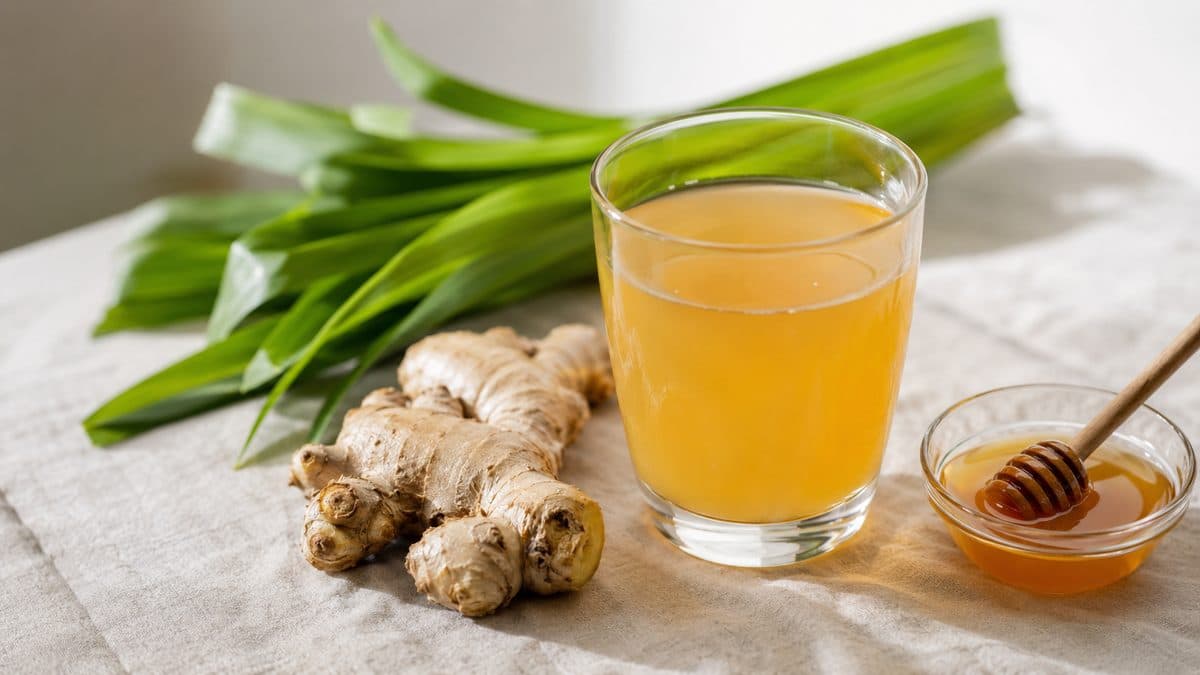
Ginger grown around Bentong, a town in western Pahang on the Selangor border. The name functions as an origin marker rather than a botanical one: it is the same species as ordinary ginger, grown in a particular place, and Malaysian cooks treat it as a premium grade.
Bentong sits in the hills of western Pahang, bordering Selangor to the west and Negeri Sembilan to the south, and the district's name travels on its produce. Ginger itself is a rhizome used as both spice and folk medicine throughout the region, so what Bentong adds is provenance rather than a different plant.
That makes it a sourcing story more than a botanical one, which is important to say plainly. A brand putting Bentong on a label is making an origin claim, and an origin claim is only worth what the paperwork behind it is worth.
As a drink it belongs to the same family as teh halia but without the tea and milk - ginger on its own, usually with sugar, drunk warm. It is the simplest product in this part of the library and the one where raw-material quality is least able to hide.
What does bentong ginger taste like?
Clean, hot and aromatic, with the heat building in the throat rather than on the tongue. Without tea or milk there is nothing between the drinker and the ginger, so the character of the root is the character of the drink.
| Character | Level | Why |
|---|---|---|
| Sweetness | Medium | Usually sweetened to make the heat drinkable, but sugar is not the point of the drink. |
| Bitterness | Low | Ginger reads as hot rather than bitter; there is no tannin or roast here. |
| Roast | Low | No roasting step - this is a brewed or extracted rhizome drink. |
| Creaminess | Low | No dairy in the traditional preparation; adding it makes it teh halia instead. |
| Aroma | High | Ginger's volatile aromatics are the first thing noticed and the reason it is drunk. |
Indicative flavour positioning to help write a product brief. It is not sensory panel data, and the finished taste is set with you at sampling stage.
What has to be decided to make Bentong ginger as a powder?
Whether the origin claim can be documented. If the label says Bentong, the supply chain has to prove it, and that is a sourcing and record-keeping commitment rather than a formulation one. Everything else follows the ordinary ginger decisions.
- An origin claim needs traceability behind it. Single-origin on a pack is a claim a buyer or an auditor can ask you to substantiate. That means supplier records tying material to the district, kept for the life of the product - decided at sourcing, not at artwork.
- Single origin means less blending room. Commodity ginger can be blended across suppliers to hold a consistent pungency. Restrict the origin and that lever is gone, so seasonal variation shows up in the finished drink unless the formula is built to absorb it.
- There is nothing to hide behind. No tea, no milk, no roast. Ginger character, fibre and any off-note from drying all land directly in the cup, which makes raw-material selection the dominant quality factor.
- Drying changes the heat. As with any ginger product, drying and heat shift pungency toward a sharper character. A formula aiming at fresh-ginger warmth has to account for that rather than simply dosing higher.
What are the Halal risk points in a Bentong ginger powder?
Few, which is a genuine advantage of a simple product. Ginger and sugar are plant derived. The checks that remain are any extract carrier, any flow or anti-caking agent, and whatever is used to standardise pungency.
Soluble ginger extracts are usually carried on an excipient such as maltodextrin or gum arabic and may be produced using ethanol, so the extract preparation needs its own certificate rather than being treated as plant material. Flow agents are the other recurring gap: magnesium stearate and stearic acid are fatty acids that may be plant or animal derived under the same name.
D&O manufactures under JAKIM Halal certification to MS 1500, and every raw material entering a Halal-certified line carries its own valid certificate. The common failure points are listed in Top 10 Ingredients That Fail Halal Certification.
Which pack formats suit bentong ginger powder?
Sachet, stick pack, jar or bulk. The format is chosen with the formula rather than after it, because it decides how the powder is protected from moisture and how the buyer meets the product.
| Format | What it suits |
|---|---|
| Sachet | Single serve, which suits a drink taken for warmth at a particular moment rather than sipped all day. |
| Stick pack | Travel and seasonal ranges; ginger drinks sell harder in cool and wet weather. |
| Jar | Home use, though aromatics fade faster with repeated opening. |
| Bulk | Food service and brands filling their own packs, or using ginger as a component in a larger blend. |
Where is this manufactured, and under what certification?
At D&O Nutraceutical Manufacturing Sdn. Bhd. in Lahat, Perak, Malaysia — six factory units certified Halal by JAKIM (MS 1500), GMP to MS 1514:2022 (SIRIM QAS, cert. GMP 00203), HACCP to MS 1480:2019 (SIRIM QAS, cert. HACCP 00425), ISO 22000 (SIRIM QAS, cert. FSMS 00229) and MeSTI (Ministry of Health, cert. ME0523069-0/1).
The plant is outside Ipoh, between Kuala Lumpur and Penang, with road access to both Port Klang and Penang Port for export. Four units are used for production and two for packing and assembly, 4,000 sq ft each.
D&O is the powder functional food manufacturer of ORIZI Group. Liquid and ready-to-drink formats are made by Nutrizens Wellness Sdn. Bhd.; cosmetics, skincare and personal care by Dr Orizi; medical devices by Skyler and Imedify.
Certificates and their certified scope are supplied on request. JAKIM Halal certification is verifiable in the MYeHALAL directory, MeSTI in the Ministry of Health FoSIM system, and the GMP, HACCP and ISO 22000 certificates with SIRIM QAS International. The MS standards themselves are published by Standards Malaysia, and ISO 22000 by ISO.
Where this flavour is produced
Bentong ginger sits in the Herbal & Botanical Drink line. The full list of instant beverage & dessertflavours D&O has produced is in the flavour library.
Frequently asked questions
- Is Bentong ginger a different species?
- No. It is the same ginger species grown in and around Bentong in western Pahang. The name is an origin marker, and what it signals is provenance and a reputation for quality rather than a botanical difference.
- Can a product legitimately claim Bentong ginger?
- Only if the supply chain can show it. An origin claim is something a buyer or auditor may ask you to substantiate, so it requires supplier records tying the material to the district and kept for the life of the product. It is a sourcing commitment, not a label choice.
- Why is single-origin ginger harder to keep consistent?
- Because blending is the usual way to even out seasonal variation, and restricting the origin removes that option. Harvest-to-harvest differences in pungency land directly in the product unless the formula is built with enough tolerance to absorb them.
- Does drying weaken ginger?
- It changes it rather than weakening it. Drying and heat shift the pungency toward a sharper, less rounded character, so a dried ginger product tastes different from fresh rather than simply milder. The formula targets one or the other deliberately.
- Where are the products made?
- In Lahat, Perak, Malaysia. The plant runs six production and packaging halls plus an on-site R&D lab built in 2026. Perak sits in the middle of peninsular Malaysia with road access to Penang and Port Klang, which matters for export lead times more than most brand owners expect.
- Can D&O develop a flavour that is not in the library?
- Yes. The library is what has been produced before, not a menu limit. Bring a reference product, a target taste or a competitor sample and the R&D lab benchmarks against it. Flavour development is part of the OEM brief rather than a separate service.
- Which certification does my product actually need?
- It depends on the product and the destination market, not on the factory. MeSTI is the Malaysian baseline for food premises, GMP and HACCP cover process control, and ISO 22000 is the international food safety management standard. D&O holds all four plus JAKIM Halal, so the question at briefing is which ones your buyer or regulator asks to see.
- Can products made here be exported to the United States?
- Yes. A facility shipping food into the US must hold an FDA food facility registration under FSMA, which D&O does. Registration is a filing requirement, not an FDA approval or endorsement. Labelling and claims still have to meet US rules for your specific product.
Get a Free Sample of Your Own Product
Tell us what you want to make — the taste or effect, your target retail price, the pack format and rough monthly volume. We come back with a costing and a free bench sample made to your brief, not a stock product. Halal OEM manufacturing in Perak, Malaysia, in sachet, stick pack, jar or bulk.
JAKIM Halal · GMP MS 1514 · HACCP MS 1480 · ISO 22000 · MeSTI certified