
Coffee · Malaysian
OEM Kopi O Powder Manufacturer in Malaysia
Also known as Kopi O kosong
OEM & private label Kopi O powder - black, kosong and sugar-free Nanyang coffee, Halal manufactured in sachet, stick pack or bulk for your brand.
What is Kopi O and where does the name come from?
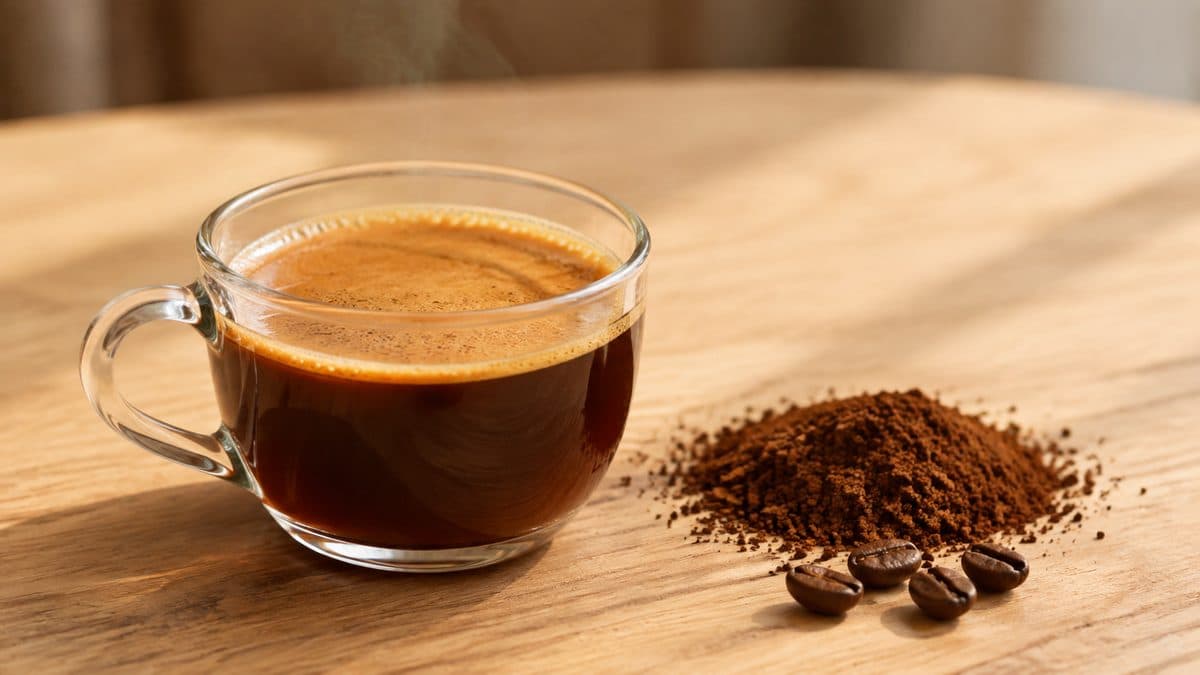
Kopi O is black coffee in the Nanyang tradition. Kopi is the Malay word for coffee; the O is Hokkien for black. Add kosong, Malay for empty, and it means no sugar either. The style carries Hainanese roots and dates to the British Malaya era.
The ordering language is the giveaway. Kopi) culture runs on a Hokkien vocabulary - O for black, kosong for no sugar, peng for iced - layered onto a Malay word, in a drink the Hainanese community built. Nanyang itself means south sea in Mandarin, the Chinese name for Southeast Asia, and that is the whole history of the drink compressed into one word on a kopitiam order.
What makes it taste the way it does is the roast. Nanyang beans are roasted dark, with sugar and margarine, which caramelises on the bean and produces the heavy, almost smoky bitterness Kopi O is known for. It is the deliberate opposite of the light margarine roast used for white coffee, and the two sit at either end of the same Malaysian coffee tradition.
For a brand this is the clean-label end of the coffee category. Kopi O kosong has no milk, no creamer and no sugar, which makes it one of the few traditional drinks that already fits a no-added-sugar claim without being reformulated into something else.
What does kopi o taste like?
Strong, dark and frankly bitter, with a caramelised edge from the sugar-and-margarine roast and no milk to soften it. Kosong means no sugar, so nothing rounds it off. It is the most assertive drink in the Malaysian coffee range.
| Character | Level | Why |
|---|---|---|
| Sweetness | Low | Kosong means no sugar; even standard Kopi O is sweetened in the cup rather than in the powder. |
| Bitterness | High | The defining trait - a dark Nanyang roast served black, with nothing to mask it. |
| Roast | High | Nanyang beans are taken dark and roasted with sugar, which caramelises on the bean. |
| Creaminess | Low | No milk and no creamer by definition; adding either makes it a different drink. |
| Aroma | High | The sugar roast produces a heavy, smoky-sweet aroma that survives instant processing well. |
Indicative flavour positioning to help write a product brief. It is not sensory panel data, and the finished taste is set with you at sampling stage.
What has to be decided to make Kopi O as a powder?
Everything rests on the coffee, because there is nothing else in the pack. No creamer carries the body, no sugar rounds the edges, and no milk hides a weak extract. The decisions are extract strength, granule behaviour and whether anything is added at all.
- There is nowhere to hide. In a 3-in-1 the creamer and sugar are most of the powder and they forgive a lot. In Kopi O the coffee is the entire product, so extract strength and roast character are the specification rather than a detail inside it.
- Dissolving behaves differently without bulk. A creamer-heavy powder has carrier material that helps it disperse. A black coffee powder has almost none, so granule size and agglomeration decide whether it dissolves cleanly or floats and clumps on the surface.
- Clarity is visible. With no milk in the cup, sediment and undissolved fines are plainly seen. The same powder that looks fine in a white coffee will look like a defect here.
- Decide early whether kosong is the product or a variant. Sugar-free is a label claim with regulatory consequences, not a packaging line. It changes the nutrition panel and sometimes the product's classification.
What are the Halal risk points in a Kopi O powder?
Fewer than in most coffee products, which is the honest answer. With no creamer there is no sodium caseinate and no dairy question. What remains is the margarine used in the roast and any anti-caking or flow agent in the blend.
The margarine sits upstream at the roaster, so its Halal status travels with the bean rather than with the blend - which means it has to be documented at the supplier, not assumed because the plant is certified. Flow agents such as magnesium stearate and stearic acid are the other common gap: both are fatty acids that may be plant or animal derived under the same name.
D&O manufactures under JAKIM Halal certification to MS 1500, and every raw material entering a Halal-certified line carries its own valid certificate. The ingredients that most often hold up certification in powder products are listed in Top 10 Ingredients That Fail Halal Certification.
Which pack formats suit kopi o powder?
Sachet, stick pack, jar or bulk. The format is chosen with the formula rather than after it, because it decides how the powder is protected from moisture and how the buyer meets the product.
| Format | What it suits |
|---|---|
| Sachet | Single-serve kosong or pre-sweetened. The format that suits a product with no bulk to protect, because the barrier does the work. |
| Stick pack | Travel, hotel amenity and e-commerce bundles, where a slim profile matters more than shelf presence. |
| Jar | Repeat home use. A black coffee powder is more exposed to humidity than a creamer blend once the jar is opened daily. |
| Bulk | Food service, kopitiam supply and brands filling their own packs. |
Where is this manufactured, and under what certification?
At D&O Nutraceutical Manufacturing Sdn. Bhd. in Lahat, Perak, Malaysia — six factory units certified Halal by JAKIM (MS 1500), GMP to MS 1514:2022 (SIRIM QAS, cert. GMP 00203), HACCP to MS 1480:2019 (SIRIM QAS, cert. HACCP 00425), ISO 22000 (SIRIM QAS, cert. FSMS 00229) and MeSTI (Ministry of Health, cert. ME0523069-0/1).
The plant is outside Ipoh, between Kuala Lumpur and Penang, with road access to both Port Klang and Penang Port for export. Four units are used for production and two for packing and assembly, 4,000 sq ft each.
D&O is the powder functional food manufacturer of ORIZI Group. Liquid and ready-to-drink formats are made by Nutrizens Wellness Sdn. Bhd.; cosmetics, skincare and personal care by Dr Orizi; medical devices by Skyler and Imedify.
Certificates and their certified scope are supplied on request. JAKIM Halal certification is verifiable in the MYeHALAL directory, MeSTI in the Ministry of Health FoSIM system, and the GMP, HACCP and ISO 22000 certificates with SIRIM QAS International. The MS standards themselves are published by Standards Malaysia, and ISO 22000 by ISO.
Where this flavour is produced
Kopi O sits in the Coffee Powder line. The full list of instant beverage & dessertflavours D&O has produced is in the flavour library.
Frequently asked questions
- What does the O in Kopi O mean?
- It is Hokkien for black. Kopi is the Malay word for coffee, and the ordering vocabulary around it comes from Hokkien, so Kopi O is literally black coffee. Adding kosong, Malay for empty, specifies no sugar as well.
- Is Kopi O the same as ordinary black instant coffee?
- No. The difference is the roast. Nanyang beans for Kopi O are roasted dark with sugar and margarine, which caramelises on the bean and gives the heavy, smoky bitterness. A standard commodity instant coffee is roasted without either and tastes markedly cleaner and flatter.
- Can Kopi O be sold as a sugar-free product?
- Kopi O kosong contains no added sugar by definition, so it is one of the few traditional drinks that fits the claim without reformulation. The claim itself still has to be substantiated on the nutrition panel, and that is settled at briefing rather than at artwork.
- Why does black coffee powder clump more than 3-in-1?
- Because there is no creamer or sugar acting as carrier material. In a 3-in-1 those make up most of the powder and help it disperse. A black coffee powder relies on granule size and agglomeration alone, which is why those are specified rather than left to the base material.
- What is the difference between OEM, ODM, private label and white label?
- OEM manufactures to your specification. ODM means the manufacturer develops the formula and you brand it. Private label puts your brand on an existing formula. White label is the same base product sold to several brands. D&O works OEM and ODM, so the formula can start from your brief or from our library.
- How is shelf life decided?
- By stability testing on your actual formula in your actual pack, not by a number quoted upfront. The powder, the barrier film and the destination climate all move it. Moisture is what usually ends a powder's life, which is why pack format is specified alongside the formula rather than after it.
- How does the sampling stage work?
- A brief goes to the R&D lab, which produces a bench sample for you to taste and adjust. Revisions are normal and expected, because taste targets are easier to describe by comparison than in words. Only once the sample is signed off does the formula, the pack format and the documentation get fixed.
- Is the factory Halal certified?
- Yes. D&O manufactures at a JAKIM-certified plant in Lahat, Perak, certified for food against MS 1500, the Malaysian Halal standard. Certificates can be checked through JAKIM's MYeHALAL directory, and MS 1500 is published by the Department of Standards Malaysia.
Get a Free Sample of Your Own Product
Tell us what you want to make — the taste or effect, your target retail price, the pack format and rough monthly volume. We come back with a costing and a free bench sample made to your brief, not a stock product. Halal OEM manufacturing in Perak, Malaysia, in sachet, stick pack, jar or bulk.
JAKIM Halal · GMP MS 1514 · HACCP MS 1480 · ISO 22000 · MeSTI certified