
Tea · International
OEM Thai Milk Tea Powder Manufacturer in Malaysia
OEM & private label Thai milk tea powder - cha yen style iced tea in 3-in-1 and bulk, Halal manufactured in sachet, stick pack or bulk for your brand.
What is Thai milk tea made of?
Ceylon black tea, milk and sugar. That is the whole recipe. Despite what many overseas versions suggest, Thai tea as drunk in Thailand is not typically brewed with spices, and the star anise or cardamom often added abroad is an adaptation rather than the original.
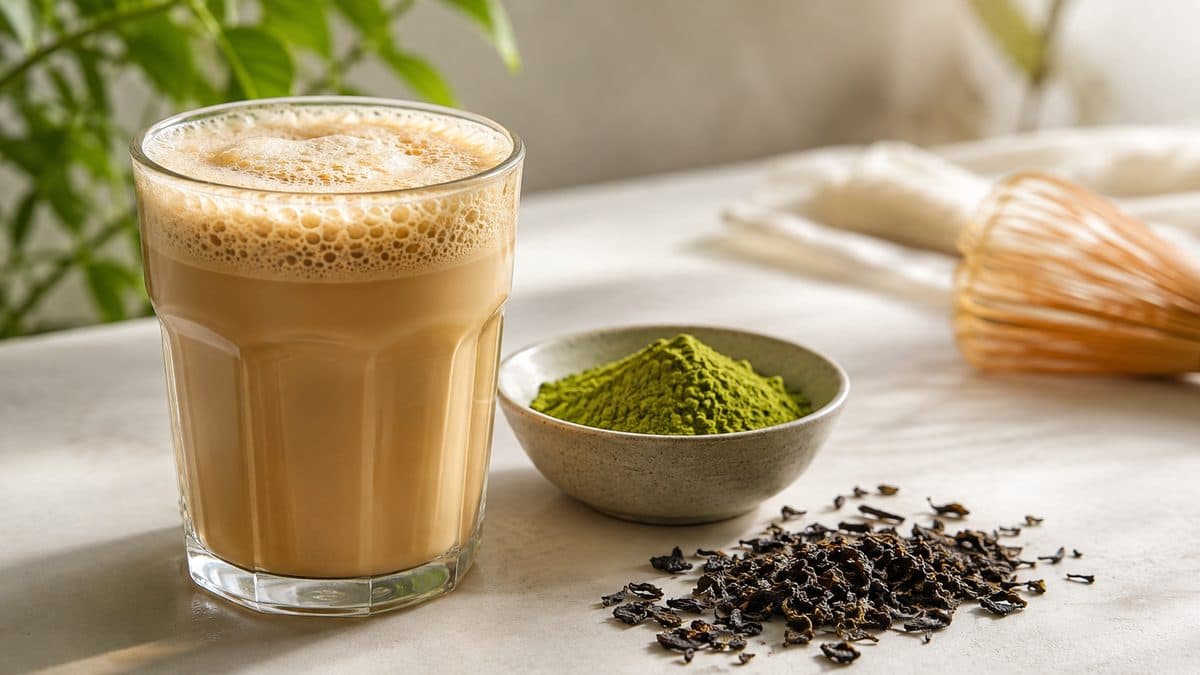
Thai tea is served hot or cold, though it is the iced version - cha yen - that travelled. The drink's signature is visual as much as gustatory: a deep orange tea layered under condensed milk, poured over ice so the two separate before being stirred together.
That orange is worth understanding before formulating. It is far stronger than brewed black tea produces on its own, and in the traditional product it comes from added colouring. Any brand taking this drink into a new market needs to know whether the colour it is copying is permitted there - which is a regulatory question, not a taste one.
In Malaysia Thai milk tea sits alongside teh tarik as the imported counterpart: sweeter, less tannic, and recognised by a colour rather than by a technique.
What does thai milk tea taste like?
Very sweet and creamy, with a soft malty black tea underneath and none of the tannic bite of teh tarik. Smooth rather than strong, and built to be drunk cold over ice where the sweetness reads as refreshing instead of heavy.
| Character | Level | Why |
|---|---|---|
| Sweetness | High | Condensed milk plus sugar; it is one of the sweetest drinks in the tea category. |
| Bitterness | Low | Markedly less tannic than teh tarik - smoothness is the point of the style. |
| Roast | Low | Brewed black tea, no roasting step involved. |
| Creaminess | High | Condensed and evaporated milk are structural to cha yen. |
| Aroma | Medium | Malty tea and cooked milk; rounder and less aromatic than a spiced chai. |
Indicative flavour positioning to help write a product brief. It is not sensory panel data, and the finished taste is set with you at sampling stage.
What has to be decided to make Thai milk tea as a powder?
Colour and cold solubility. The drink is identified by its orange before it is tasted, and it is drunk over ice - which is the hardest condition you can ask an instant powder to dissolve in.
- Colour is a regulatory decision, not a styling one. The signature orange is stronger than tea alone gives. Permitted colour additives differ by market, so the destination country has to be named at briefing or the product may be unsellable where it was aimed.
- Cold dissolving is the real engineering problem. Cha yen is an iced drink. Powders that disperse happily in hot water can leave undissolved grains and a gritty base in cold milk or iced water, so cold performance is specified and tested rather than assumed.
- Sweetness is high, so the tea has to be chosen for body not strength. A tannic brew fights the condensed milk and loses the smoothness that defines the style; a weak one disappears entirely.
- Decide whether the product is a sachet drink or a shop base. A café bulk powder is dosed by a trained hand and can be stronger; a retail sachet has to be right at one fixed ratio.
What are the Halal risk points in a Thai milk tea powder?
The milk system, the emulsifier and the colour. Non-dairy creamer brings sodium caseinate and E471; colour preparations are the specific risk here, because some natural colours use animal-derived or insect-derived sources and carriers.
Carmine, also called cochineal or E120, is insect derived and is not accepted. Even where the pigment itself is plant based, a colour preparation may use gelatine or an animal-derived carrier to stabilise it, so the certificate has to cover the whole preparation rather than the pigment alone. On a product defined by its colour, that is not a corner to leave to assumption.
D&O manufactures under JAKIM Halal certification to MS 1500, and every raw material on a Halal-certified line carries its own valid certificate. The recurring failure points are set out in Top 10 Ingredients That Fail Halal Certification.
Which pack formats suit thai milk tea powder?
Sachet, stick pack, jar or bulk. The format is chosen with the formula rather than after it, because it decides how the powder is protected from moisture and how the buyer meets the product.
| Format | What it suits |
|---|---|
| Sachet | Retail single serve. The fixed ratio matters because colour and sweetness both drift if the dose does. |
| Stick pack | Convenience and e-commerce bundles, often sold as part of a mixed milk-tea range. |
| Jar | Home use, though an iced drink mixed by eye from a jar is harder to get consistent. |
| Bulk | Café and bubble-tea shop base, where a trained operator doses it and turnover is fast. |
Where is this manufactured, and under what certification?
At D&O Nutraceutical Manufacturing Sdn. Bhd. in Lahat, Perak, Malaysia — six factory units certified Halal by JAKIM (MS 1500), GMP to MS 1514:2022 (SIRIM QAS, cert. GMP 00203), HACCP to MS 1480:2019 (SIRIM QAS, cert. HACCP 00425), ISO 22000 (SIRIM QAS, cert. FSMS 00229) and MeSTI (Ministry of Health, cert. ME0523069-0/1).
The plant is outside Ipoh, between Kuala Lumpur and Penang, with road access to both Port Klang and Penang Port for export. Four units are used for production and two for packing and assembly, 4,000 sq ft each.
D&O is the powder functional food manufacturer of ORIZI Group. Liquid and ready-to-drink formats are made by Nutrizens Wellness Sdn. Bhd.; cosmetics, skincare and personal care by Dr Orizi; medical devices by Skyler and Imedify.
Certificates and their certified scope are supplied on request. JAKIM Halal certification is verifiable in the MYeHALAL directory, MeSTI in the Ministry of Health FoSIM system, and the GMP, HACCP and ISO 22000 certificates with SIRIM QAS International. The MS standards themselves are published by Standards Malaysia, and ISO 22000 by ISO.
Where this flavour is produced
Thai milk tea sits in the Tea Powder line. The full list of instant beverage & dessertflavours D&O has produced is in the flavour library.
Frequently asked questions
- Does authentic Thai tea contain spices?
- Usually not. Thai tea as drunk in Thailand is Ceylon black tea, milk and sugar. The star anise and cardamom that appear in many English-language recipes are an overseas adaptation, so a spiced version is a choice rather than a return to the original.
- Where does the orange colour come from?
- Not from the tea alone - brewed black tea does not reach that shade. In the traditional product it comes from added colouring. Because permitted colour additives differ by country, the destination market decides what is possible before the formula does.
- Why does Thai milk tea powder go gritty over ice?
- Because cold water dissolves far less readily than hot. A powder built for hot preparation can leave undissolved grains in an iced drink. Cold solubility is a separate specification and has to be tested at the temperature the drink is actually served.
- How is it different from teh tarik?
- Thai milk tea is sweeter, smoother and much less tannic, and it is usually served iced. Teh tarik uses a hard brew that leaves an astringent backbone and is drunk hot with a froth on top. They share condensed milk and almost nothing else.
- Can products made here be exported to the United States?
- Yes. A facility shipping food into the US must hold an FDA food facility registration under FSMA, which D&O does. Registration is a filing requirement, not an FDA approval or endorsement. Labelling and claims still have to meet US rules for your specific product.
- Who is responsible for the label and artwork?
- The brand owner owns the artwork and the claims on it. D&O supplies the product data the label must carry, such as ingredient declaration and nutritional information, and will flag where a claim would change the product's regulatory classification. Final approval of the printed label stays with the brand.
- Does a Halal-certified factory make every ingredient Halal?
- No, and this is the most common misunderstanding. Certification covers the plant and the materials running in it, so every raw material entering a Halal line needs its own valid certificate from its supplier. An assurance in an email is not a certificate. Substituting an ingredient late means re-sampling the formula.
- How does the sampling stage work?
- A brief goes to the R&D lab, which produces a bench sample for you to taste and adjust. Revisions are normal and expected, because taste targets are easier to describe by comparison than in words. Only once the sample is signed off does the formula, the pack format and the documentation get fixed.
Get a Free Sample of Your Own Product
Tell us what you want to make — the taste or effect, your target retail price, the pack format and rough monthly volume. We come back with a costing and a free bench sample made to your brief, not a stock product. Halal OEM manufacturing in Perak, Malaysia, in sachet, stick pack, jar or bulk.
JAKIM Halal · GMP MS 1514 · HACCP MS 1480 · ISO 22000 · MeSTI certified